

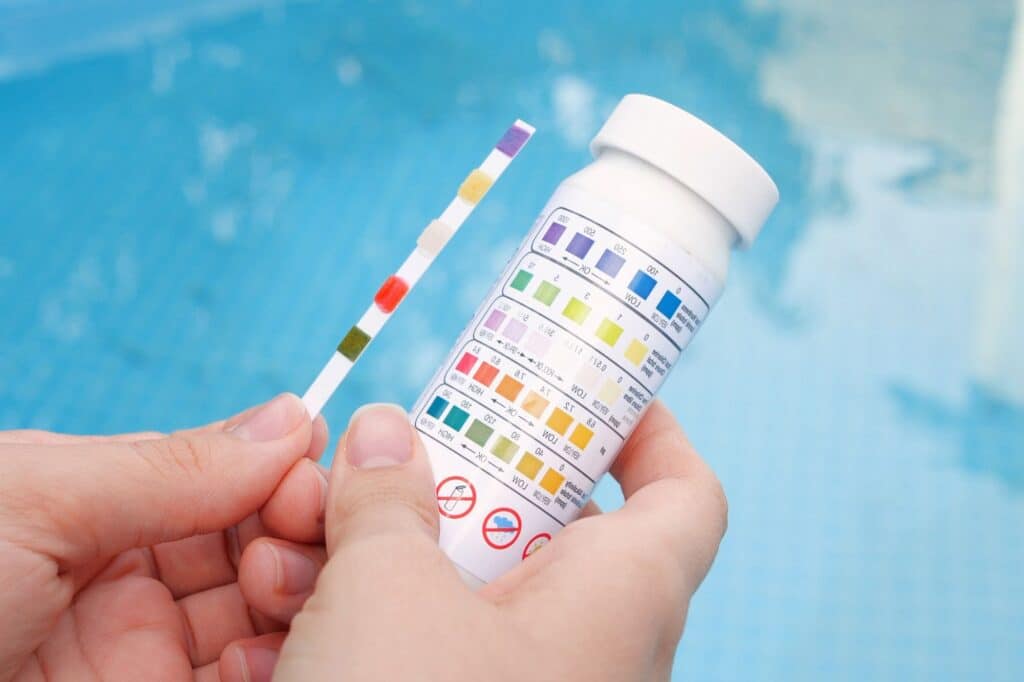
We have all heard of “testing the waters.” But when it comes to swimming pool care and maintenance, water testing is the best route to ensure you have an easy-to-maintain pool. It’s more than just eyeballing the water condition or touching the water to detect the temperature. Test kits, strips, and digital readers are used to check pool water balance levels.
Why Test Pool Water?
Without water, a swimming pool is just a hole in the ground. And without clean, clear, healthy water, swimming is just no fun at all.
Since swimming pools are generally used by multiple people at any given time, it is imperative to test and treat pool water regularly. Not only does it keep the water clean and prevent the spread of infectious diseases, but it also enhances the pool experience and prevents damage to your pool and equipment.
What Water Tests Are Needed for a Pool?
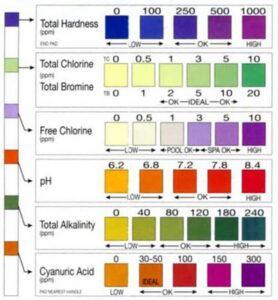
In order for us to have a sparkling clean and well-balanced pool, we have to ensure that the water chemistry levels stay within the following ideal ranges:
- pH: 7.4-7.6
- Total Alkalinity: 80-120 ppm
- Calcium Hardness: 200-400 ppm
- Free Available Chlorine: 2.0-4.0 ppm
- Bromine: 3.0-5.0 ppm
- Cyanuric Acid: 30-50 ppm
- Metals: 0 ppm
- Phosphates: 0 ppm
- Total Dissolved Solids: 0-2500 ppm (non-salt water pools)
Of course, there are instances when test results might fall slightly outside of these ranges, and that’s usually OK! As long as you’re actively adjusting water chemistry and trying to maintain water in the ideal range, you’re on the right track.
Testing your pool water and maintaining perfect chemical harmony isn’t rocket science. However, it definitely involves regularity and consistency on your part.
How Often Should I Test Pool Water?
We recommend testing your pool water at least once per week. Add chemicals if you see an increase/decrease in ideal chemical levels. If you’re unfamiliar with your pool’s water balance trends, the pool is used frequently, the weather is exceptionally warm, you’re having water clarity issues, or if a storm recently rolled through your yard, you may need to test more frequently – at least 2-3 times per week.
pH and Free Available Chlorine levels should be tested more often, perhaps daily, until you come to a good understanding of how they fluctuate. Other readings for Calcium Hardness, Total Alkalinity, Cyanuric Acid, Metals, Phosphates, and Total Dissolved Solids, tend to move more slowly and can be tested weekly or even monthly in some cases.
Many basic test kits will at least cover your weekly testing needs. But you may need to purchase a more robust kit for monthly testing.
How Do I Test Pool Water?
There are several types of testing supplies available on the market, all varying in price and accuracy. It’s important to remember that certain factors will influence the accuracy of your water test. Ensure that your testing supplies haven’t expired and keep them stored in a dry area at room temperature.
Circulate the pool on the pump’s high setting for at least an hour before pulling a water sample for testing. Test results from stagnant water may not be very accurate. Next, gather your water sample around elbow deep, or about 12-18″ below the surface. Avoid sampling near pool returns or floating chemical dispensers.
Once you have your test results, keep track of them. You can use a daily planner, dedicated pool calendar, or enter them into your favorite pool care app. Recording water balance trends will help you anticipate future changes in water chemistry, making it easier to maintain water balance over time.
You can always bring a water sample to us at the store, and we will professionally test it and give you a computerized analysis with directions on how to bring your water into balance. Just bring a quart of pool water and we will be happy to test for you.